Growing root crops year-round transforms your garden into a continuous source of fresh, nutritious vegetables. With proper planning and strategic timing, you’ll never face an empty harvest basket again.

Root vegetables are among the most rewarding crops for home gardeners, offering exceptional storage capabilities, outstanding nutritional value, and remarkable versatility in the kitchen. Unlike many above-ground vegetables that require specific growing conditions and careful timing, root crops demonstrate remarkable adaptability across various climates and seasons. Understanding when to plant each variety ensures your garden delivers consistent harvests throughout the entire year, maximizing both space utilization and food security for your household.
🌱 Understanding Root Crop Growing Seasons
Root crops fall into distinct categories based on their temperature preferences and growing requirements. Cool-season roots thrive in temperatures between 50-70°F, while warm-season varieties prefer temperatures above 60°F. This fundamental distinction becomes your roadmap for planning successive plantings throughout the year.
The beauty of root vegetables lies in their underground development, which protects them from many weather challenges that affect leafy greens and fruiting plants. Their growing patterns allow gardeners in most climates to maintain continuous production by strategically rotating between cold-hardy and heat-tolerant varieties.
Cool-Season Champions
Carrots, beets, turnips, radishes, and parsnips dominate the cool-season category. These vegetables not only tolerate frost but often develop sweeter flavors after exposure to light freezing temperatures. Their ability to overwinter in many zones makes them invaluable for year-round production strategies.
Radishes serve as the gateway crop for beginners, maturing in just 25-30 days and signaling when soil conditions suit other root vegetables. Their rapid growth cycle allows multiple successions even in short growing seasons, making them perfect indicator plants for your planting calendar.
Warm-Season Varieties
Sweet potatoes, ginger, turmeric, and certain potato varieties require warmer soil temperatures to germinate and develop properly. These crops fill the summer gap when cool-season roots struggle with heat stress, ensuring your root crop harvest never experiences a seasonal drought.
📅 Spring Planting Strategy: March Through May
Spring represents the beginning of the root crop season in most temperate climates. As soil temperatures reach 40°F and above, the planting window opens for cold-hardy varieties that will mature before summer heat arrives.
Start your spring calendar with early plantings of radishes, turnips, and early-season carrots approximately 4-6 weeks before your last expected frost date. These quick-maturing varieties will provide harvests within 30-60 days, clearing space for summer crops while delivering fresh produce when grocery store prices peak.
Early Spring Plantings (6-4 Weeks Before Last Frost)
Radishes lead the charge, germinating in soil as cool as 40°F. Plant them every two weeks for continuous harvests. Follow immediately with turnips and early carrot varieties like ‘Nantes’ or ‘Danvers’, which tolerate cool soil better than long-season types.
Beets enter the rotation when soil reaches 50°F, typically 4 weeks before the last frost. Their seeds contain multiple embryos, so thin seedlings to 3-4 inches apart for optimal root development. The thinned greens provide nutritious early-season salad material.
Late Spring Transitions (2 Weeks Before to 2 Weeks After Last Frost)
As the frost-free date approaches, expand your plantings to include parsnips, which require a long growing season of 120-180 days. Their notoriously slow germination benefits from pre-soaking seeds overnight before planting.
Plant potato tubers when soil temperatures consistently reach 45-50°F. Early varieties mature in 70-90 days, providing mid-summer harvests, while storage varieties planted simultaneously mature in fall for long-term keeping.
☀️ Summer Planting Windows: June Through August
Summer seems counterintuitive for root crop planting, but strategic selections ensure continuous harvests while preparing for fall abundance. This period focuses on heat-tolerant varieties and succession plantings for autumn maturity.
Sweet potatoes dominate summer root crop planting, requiring warm soil temperatures above 60°F for slip establishment. Plant slips in early summer for fall harvest, allowing the full 90-120 days needed for substantial tuber development.
Early Summer Focus (June)
Continue succession plantings of quick-maturing radishes and beets every 2-3 weeks, selecting heat-tolerant varieties bred for summer production. ‘French Breakfast’ radishes and ‘Bull’s Blood’ beets perform admirably during warmer months.
Plant storage carrots in early to mid-June for fall harvest. These varieties require cooler temperatures for sizing up but need warm soil for germination. Mid-summer planting hits the sweet spot, allowing roots to develop during autumn’s ideal conditions.
Late Summer Strategy (July-August)
Mid to late summer represents prime time for fall and winter root crop plantings. Calculate your first expected frost date and count backward based on each variety’s days to maturity, adding two weeks to account for shorter day lengths and cooler temperatures.
Plant turnips, radishes, and beets 6-8 weeks before the first frost. These fast growers will mature before hard freezes arrive. Carrots planted 10-12 weeks before frost develop slowly in cooling temperatures, producing exceptionally sweet roots perfect for winter storage.
🍂 Fall Planting for Winter Harvests: September Through November
Fall planting extends your growing season dramatically, especially in mild winter climates. Many root crops improve in flavor after frost exposure, making autumn plantings strategically superior for flavor development.
In zones 7 and warmer, continue planting radishes, turnips, and carrots throughout September and even into October for winter and early spring harvests. Cold frames and row covers extend these windows even further north.
Early Fall Opportunities (September)
September plantings of radishes mature in October, providing fresh harvests when many gardens wind down. Quick-growing Asian radish varieties like ‘Daikon’ planted in early September size up beautifully for November harvest.
Plant garlic cloves in early to mid-fall, 4-6 weeks before the ground freezes. Though technically not a root vegetable, garlic follows similar planting patterns and overwinters successfully, producing bulbs the following summer.
Late Fall and Overwintering (October-November)
In mild climates, late fall plantings of cold-hardy varieties like ‘Walla Walla’ onions and hardy carrot varieties establish before winter, resuming growth in spring for early summer harvests. This technique effectively extends your growing season by utilizing winter dormancy rather than fighting it.
❄️ Winter Growing and Storage Strategies
Winter doesn’t mean the end of root crop harvests. Strategic variety selection and protection methods keep fresh vegetables available even in challenging climates. Many root crops store perfectly in the ground, essentially turning your garden into a natural refrigerator.
Carrots, parsnips, turnips, and radishes tolerate significant frost when protected with heavy mulch layers. Apply 8-12 inches of straw or leaves over crops, marking rows for easy location under snow. Harvest as needed throughout winter, though ground freezing may temporarily halt access.
In-Ground Storage Techniques
The in-ground storage method works brilliantly for parsnips, which actually require frost exposure to convert starches into sugars, dramatically improving flavor. Leave them in the ground all winter, harvesting in early spring before new growth begins.
Carrots and beets store successfully in-ground in zones 6 and warmer with adequate mulch protection. In colder zones, harvest before hard freezes and store in root cellars or refrigerators in containers with slightly moistened sand.
Indoor Growing Options
Microgreen radishes and baby carrots grow successfully indoors during winter months, providing fresh flavors even when outdoor growing proves impossible. Deep containers (at least 12 inches) filled with quality potting soil support these crops near sunny windows or under grow lights.
🗓️ Creating Your Personalized Planting Calendar
Developing a customized root crop calendar requires understanding your specific frost dates, climate zone, and available space. Begin by determining your last spring frost and first fall frost dates, which frame your entire growing season.
Map out succession plantings every 2-3 weeks for fast-maturing crops like radishes and salad turnips. Schedule longer-season crops like parsnips and storage carrots at specific times calculated backward from your first frost date.
Zone-Specific Considerations
Gardeners in zones 3-5 focus intensively on spring through fall production, maximizing the frost-free period with succession plantings and season extension techniques. Winter production requires cold frames, hoop houses, or indoor growing setups.
Zones 6-7 enjoy extended fall growing and often successful winter harvesting of cold-hardy varieties with proper mulching. Year-round production becomes achievable with minimal protection.
Zones 8-10 flip the script entirely, with cool-season root crops planted from fall through spring, avoiding summer heat stress. Warm-season varieties fill the summer gap, creating true year-round production cycles.
🌾 Succession Planting for Continuous Harvests
Succession planting represents the secret to never running out of fresh root vegetables. Rather than planting all carrots or beets simultaneously, stagger plantings every 2-3 weeks in manageable quantities matched to your household’s consumption rate.
This approach prevents feast-or-famine scenarios common in home gardens while ensuring vegetables reach harvest at peak quality rather than becoming overmature while waiting to be used. A 10-foot row planted every three weeks provides more usable harvest than a 40-foot row planted once.
Calculating Succession Intervals
Fast-maturing crops (radishes, salad turnips, baby beets) benefit from 2-week succession intervals. Medium-season crops (standard beets, early carrots) work well on 3-week schedules. Long-season varieties (storage carrots, parsnips) may only need 2-3 plantings annually due to extended storage capabilities.
💧 Soil Preparation and Maintenance
Root crop success depends heavily on proper soil conditions. Unlike leafy greens that tolerate average soil, roots require loose, well-draining soil free of rocks and hardpan layers that cause forking and deformity.
Work soil to at least 12 inches deep for standard varieties, or 18 inches for long-rooted types like parsnips and long carrots. Incorporate generous amounts of compost, avoiding fresh manure which causes forking and excessive foliage growth at the expense of root development.
Maintaining Soil Fertility
Root crops demand moderate fertility, with emphasis on phosphorus and potassium rather than nitrogen. Excessive nitrogen produces lush tops but poorly developed roots. Side-dress growing crops with compost tea or balanced organic fertilizers every 3-4 weeks.
pH requirements vary slightly by crop, but most root vegetables thrive between 6.0-7.0. Annual soil testing guides amendment applications, ensuring optimal growing conditions for each planting cycle.
🐛 Pest and Disease Management Throughout Seasons
Different seasons present unique pest and disease challenges for root crops. Spring plantings face slug damage during wet weather, while summer crops contend with root maggots and wireworms. Fall plantings often escape pest pressure entirely as insect populations decline.
Row covers installed immediately after planting prevent root maggot flies from laying eggs near plants, the primary pest prevention strategy for spring brassica-family roots like turnips and radishes. Remove covers once temperatures exceed 75°F consistently.
Seasonal Disease Considerations
Spring’s wet conditions favor fungal diseases like damping-off and root rot. Ensure excellent drainage and avoid overwatering. Summer heat stress makes plants susceptible to bacterial infections. Consistent moisture levels and afternoon shade cloth help vulnerable plantings.
Fall plantings generally experience fewer disease issues as cooler temperatures slow pathogen development. Winter storage diseases develop during harvest handling and storage rather than in the garden, making careful harvesting and curing essential.
📊 Sample Year-Round Planting Schedule
| Month | Crops to Plant | Expected Harvest |
|---|---|---|
| January-February | Plan garden, order seeds, indoor microgreens | Winter storage crops |
| March | Radishes, turnips, early carrots, beets | May-June |
| April | Succession plantings, potatoes, parsnips | June-October |
| May | Sweet potato slips, summer succession plantings | July-October |
| June | Storage carrots, heat-tolerant varieties | September-November |
| July | Fall radishes, turnips, beets | September-October |
| August | Fall carrots, winter storage varieties | October-February |
| September | Quick radishes, overwintering varieties | October-May |
| October | Garlic, spring-harvesting crops (mild zones) | May-July |
| November-December | Protect in-ground storage crops, indoor growing | As needed from storage |
🎯 Maximizing Limited Space
Small gardens benefit tremendously from root crops’ vertical growing habit, which produces substantial yields in minimal square footage. A 4×4 foot raised bed can produce dozens of pounds of root vegetables annually through intensive succession planting.
Interplanting fast-maturing radishes between slower-growing carrots maximizes space utilization. Radishes mature and clear out just as carrots need additional room to size up, essentially growing two crops in one footprint.
Container Growing Strategies
Container gardening accommodates most root crops successfully with proper depth considerations. Radishes, beets, and baby carrots thrive in containers as shallow as 8 inches. Full-size carrots require 12-inch depth, while parsnips demand 18-inch containers for proper development.
Select wide containers rather than deep narrow ones, planting multiple specimens in each pot. A 14-inch diameter container supports 16-20 radishes or 8-10 carrots, providing worthwhile harvests from balcony and patio spaces.
🌟 Advanced Techniques for Year-Round Production
Serious root crop enthusiasts employ season extension structures to push growing boundaries beyond natural limitations. Cold frames extend both spring and fall seasons by 4-6 weeks, while unheated hoop houses enable winter harvesting even in zone 5.
Low tunnels constructed from wire hoops and row cover fabric cost little but deliver significant season extension. Install them over fall plantings in late October, creating microclimates that keep soil workable and roots actively growing weeks beyond normal frost tolerance.
Microclimate Management
Strategic garden placement near south-facing walls or fences captures reflected heat, warming soil earlier in spring and maintaining workable conditions later in fall. Raised beds warm faster than ground-level gardens, advancing spring planting by 1-2 weeks.
Black plastic mulch laid over planting beds two weeks before spring planting warms soil significantly, while white or reflective mulches keep summer soil cooler for heat-sensitive crops. These simple techniques effectively shift your growing zone by one full rating.
🥕 Harvesting and Storage for Maximum Quality
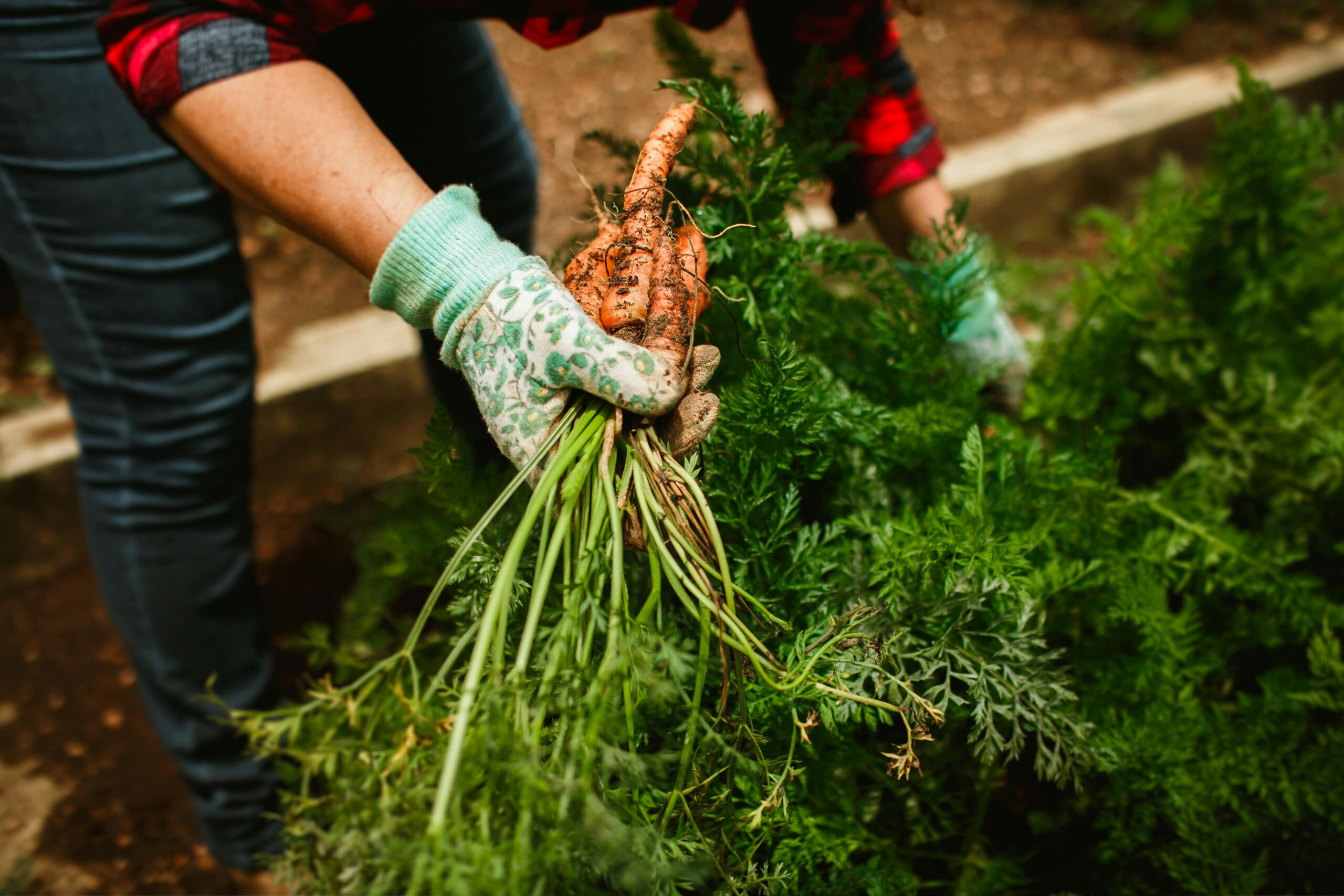
Proper harvesting timing dramatically affects both flavor and storage longevity. Most root crops achieve peak flavor at moderate sizes rather than maximum dimensions. Carrots taste sweetest at 1/2 to 3/4 inch diameter, while larger specimens often develop woody cores.
Harvest morning hours when roots contain maximum moisture content and sugars haven’t been metabolized by afternoon warmth. Gently loosen soil with a garden fork before pulling to prevent breaking and damage that reduces storage life.
Curing and Storage Protocols
Root crops destined for storage require brief curing periods that toughen skins and heal minor injuries. Brush off excess soil without washing, then hold in a cool, humid location for 7-10 days before long-term storage.
Optimal storage conditions vary by crop: carrots and beets prefer high humidity and near-freezing temperatures, while sweet potatoes require warm curing followed by storage at 55-60°F. Matching storage conditions to each crop’s preferences extends keeping quality from weeks to months.
🌍 Adapting Calendars to Climate Change
Shifting weather patterns require flexible planting calendars that respond to actual conditions rather than historical averages. Track last spring frost and first fall frost dates annually, adjusting your calendar as patterns emerge.
Earlier springs and later falls extend growing seasons but also introduce new challenges like increased pest pressure and summer heat stress. Diversify variety selections to include both traditional and climate-adapted types, building resilience into your planting plan.
Year-round root crop production transforms home gardens from seasonal hobbies into reliable food sources. By understanding each crop’s temperature preferences, strategically timing plantings across all seasons, and employing succession planting techniques, you’ll master the art of continuous harvests. The investment in planning pays dividends in fresh, nutritious vegetables gracing your table every month of the year, regardless of what challenges the weather presents. Start with the basics outlined in this calendar, then refine based on your specific conditions and preferences, building knowledge that serves you for years to come.